I was not familiar with what Translanguaging was before I began watching these videos and reading this article. I related most to the videos on Cuny. I am monolingual, and I have always been nervous about how I would teach a class with emergent bilingual students. I liked hearing about those teachers stories, and how they were able to communicate with students who were emergent bilinguals. I especially connected with the teacher who used graphic novels as a way to help their students communicate. I am a firm believer in visuals (being an art teacher myself), and I believe that art does not have to only take place in the art classroom, but can be a very great tool for any classroom. Especially for emergent bilinguals as we saw in this video. Visual language is universal, and should be utilized all the time in my opinion. Although, I am a visual learner so I could be a bit bias.
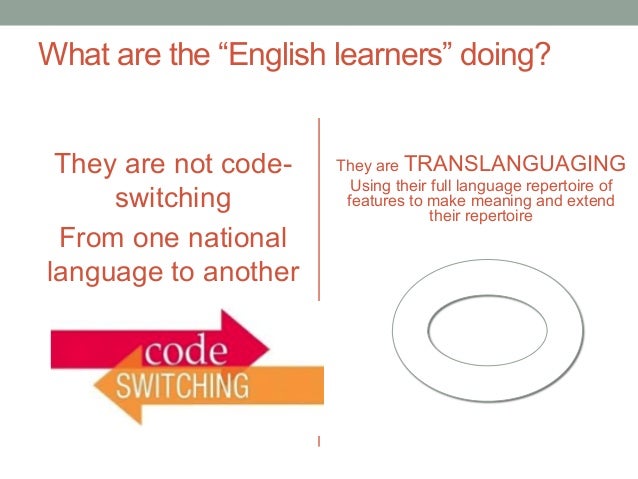
Translanguaging vs. Code Switching
As I was doing further research on
Translanguaging I stumbled upon this TED talk called
The Cost of Code Switching. I thought to myself, is that the same as
Translanguaging? As Chandra Arthur began her story I started to see the difference between the two terms. Code switching lacks diversity whereas
Translanguaging embraces it. I never realized the difference until I heard someone put it into context.
Translanguaging embraces the use of both languages in order to gain understanding whereas code switching forces the person to switch her/his way of speaking or dressing or interests in order to fit in. It made me more aware of how society is set up, and how society expects people to code switch, and if they do not they will be judged. It's unfortunate that code switching is expected.
Translanguaging should be the expectation, not code switching.



Comments
Post a Comment